6100 W. 41st St. Sioux Falls, SD 57106
Yes, you can have a cavity without tooth pain, especially during the early stages of tooth decay. Many people expect a cavity to cause a sharp ache or sensitivity. However, tooth decay can develop quietly before you notice any discomfort. At Designer Dentistry & Smiles in Sioux Falls, Dr. Kendra Zuercher and Dr. Nichole Cauwels help patients understand why routine dental visits matter, even when their teeth feel fine.
A cavity starts when bacteria in your mouth produce acids that weaken tooth enamel. Over time, these acids can create a small hole in the tooth. Although you may not feel anything at first, the damage can continue to grow.
So, how can you tell whether something is wrong? Understanding the early warning signs can help you seek care before a small cavity becomes a bigger problem.
Why Can a Cavity Develop Without Pain?
Tooth enamel is the hard outer layer that protects your teeth. Because enamel does not contain nerves, early damage may not cause pain. As a result, you might have a cavity for weeks or months without knowing it.
However, decay can eventually reach the softer layers beneath the enamel. These layers contain tiny pathways that lead toward the tooth’s nerve. Once decay gets deeper, you may notice sensitivity, discomfort, or a toothache.
Several factors can make a cavity difficult to spot:
- Small areas of decay: Early cavities may be too small to see in a mirror.
- Hidden locations: Decay often develops between teeth or near the gumline.
- Slow progression: Some cavities grow gradually, which makes changes harder to notice.
- Different pain responses: Every person experiences tooth sensitivity differently.
For example, you might chew normally and drink cold water without any discomfort. Nevertheless, decay could still be present. Regular examinations with a Sioux Falls dentist at Designer Dentistry & Smiles Sioux Falls can help identify problems before symptoms become obvious.
Early Signs of a Cavity Without Tooth Pain
Pain is not the only warning sign of tooth decay. In fact, noticing small changes in your teeth can help you get treatment sooner.
1. White, Brown, or Dark Spots
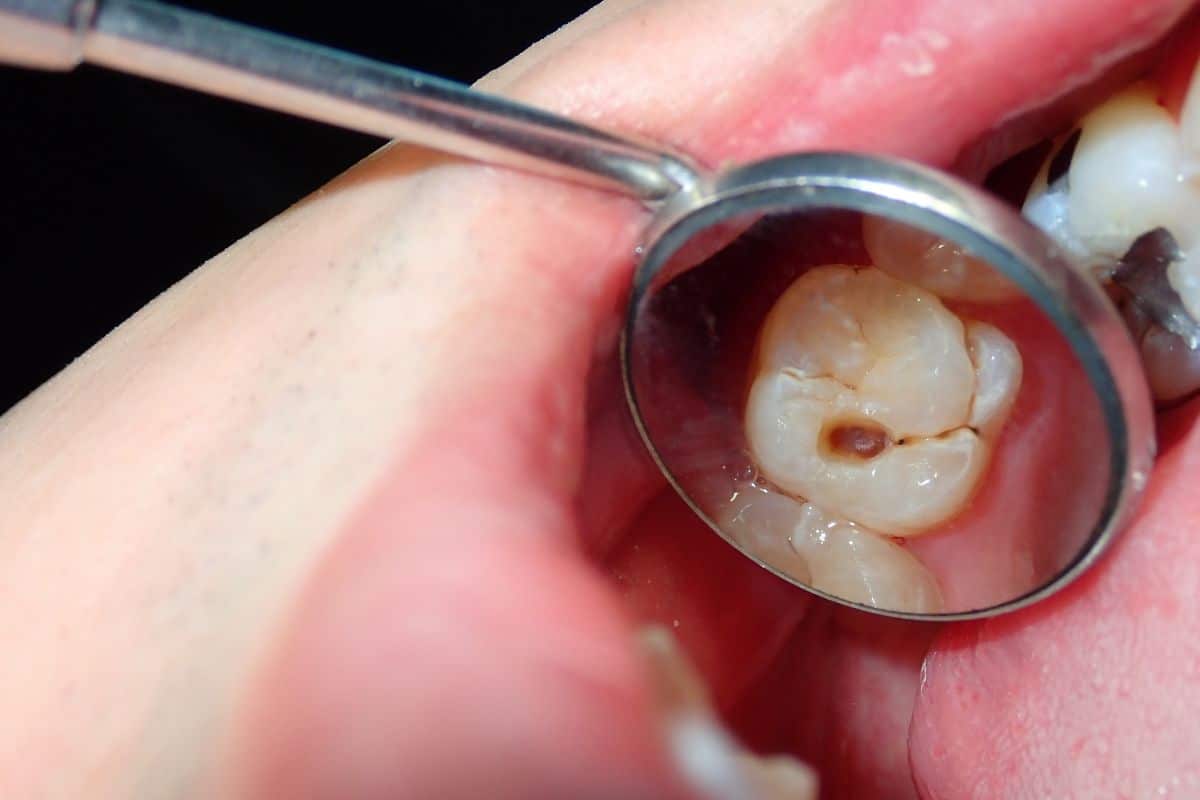
One early sign of decay is a change in tooth color. You may notice a chalky white area, a brown mark, or a small dark spot.
White spots can appear when minerals leave the enamel. Meanwhile, brown or black spots may indicate staining or decay. However, color alone cannot confirm that you have a cavity.
A dentist can examine the area and determine whether it needs treatment.
2. Sensitivity to Hot, Cold, or Sweet Foods
You might feel a brief twinge when eating ice cream or drinking hot coffee. Although sensitivity has several possible causes, it can sometimes point to tooth decay.
Pay attention if the sensation keeps returning in the same tooth. Also, tell your dentist if the sensitivity lasts after you finish eating or drinking.
3. Food Getting Stuck Between Teeth
Do you often find food trapped in the same space between two teeth? A new cavity or a change in an existing filling could create an area where food collects.
Of course, food can become trapped between healthy teeth, too. Still, a repeated change deserves attention, especially when flossing becomes difficult.
4. Rough Edges or Small Holes
Sometimes, you may feel a rough patch with your tongue. You might even notice a tiny hole in the tooth.
These changes can indicate enamel damage or a cavity. Avoid poking the area with sharp objects, because doing so could irritate the tooth or gums.
What Causes Cavities When Your Teeth Feel Fine?
Cavities develop when bacteria in dental plaque feed on sugars and produce acids. These acids gradually remove minerals from tooth enamel. If the tooth cannot repair the damage through saliva and fluoride, decay may develop.
Several everyday habits can increase your risk.
- Frequent snacking: Eating sugary or starchy foods throughout the day gives bacteria more chances to produce acids.
- Sugary drinks: Soda, sweetened coffee, and sports drinks can contribute to enamel damage.
- Inconsistent brushing: Plaque can build up when you do not clean your teeth regularly.
- Skipping flossing: Food particles and plaque can remain between teeth even when you brush well.
- Dry mouth: Saliva helps wash away food and neutralize acids, so reduced saliva can increase cavity risk.
Age, medications, and certain health conditions can also affect your risk. Therefore, even people with good brushing habits may develop cavities.
How Dentists Find Cavities Before They Hurt
Routine dental examinations help identify tooth decay that you cannot see or feel. During your visit, the dentist checks your teeth, gums, existing fillings, and other areas of concern.
Depending on your needs, the examination may include dental X-rays. These images can reveal decay between teeth or beneath existing dental work.
Your dentist may also ask about your eating habits, oral hygiene routine, medications, and any recent sensitivity. Together, these details help guide your care.
What happens if your dentist finds a cavity?
Treatment depends on how far the decay has progressed.
- Early enamel changes: Fluoride and improved home care may help some early lesions recover minerals before a hole forms.
- Small cavities: A dental filling can restore the damaged part of the tooth.
- Deeper decay: A crown or root canal treatment may be necessary if the damage reaches deeper tissues.
- Severe damage: In some cases, extraction becomes necessary when the tooth cannot be saved.
Fortunately, finding decay early often gives you more treatment options. That is why routine checkups remain important even when nothing hurts.
How Can You Prevent Cavities Before Symptoms Appear?
Good daily habits help protect your teeth, although no routine can eliminate every risk.
Start with these simple steps:
- Brush twice a day. Use fluoride toothpaste and brush for two minutes each time.
- Clean between your teeth daily. Floss or use another dentist-recommended interdental cleaner.
- Drink water regularly. Water helps rinse away food and supports normal saliva production.
- Limit frequent sugary snacks. Try to keep sweet foods and drinks to mealtimes rather than sipping or snacking all day.
- Keep dental appointments. Your dentist can spot changes before they become painful.
- Ask about fluoride. Your dentist may recommend additional fluoride protection if you have a higher risk of decay.
Also, avoid using pain as your only measure of dental health. A tooth can need attention long before it starts to ache.
When Should You See a Dentist?
You should arrange an examination if you notice a dark spot, a rough area, recurring sensitivity, or food becoming trapped in a new way. Likewise, schedule a visit if you have not had a dental checkup in a while.
Seek prompt dental care if you develop persistent pain, swelling, a broken tooth, or pain when biting. If you experience facial swelling with trouble breathing or swallowing, seek emergency medical care.
Remember, a lack of pain does not mean a tooth is healthy. Early attention can help prevent more complex treatment later.
Protect Your Smile at Designer Dentistry & Smiles
A cavity may develop quietly, but you do not have to wait for pain to find it. Regular examinations, good home care, and early treatment can help protect your natural teeth for years to come.
If you have concerns about tooth decay, schedule an appointment with Designer Dentistry & Smiles in Sioux Falls.